
Blog
Top Computer Courses After 10th & 12th
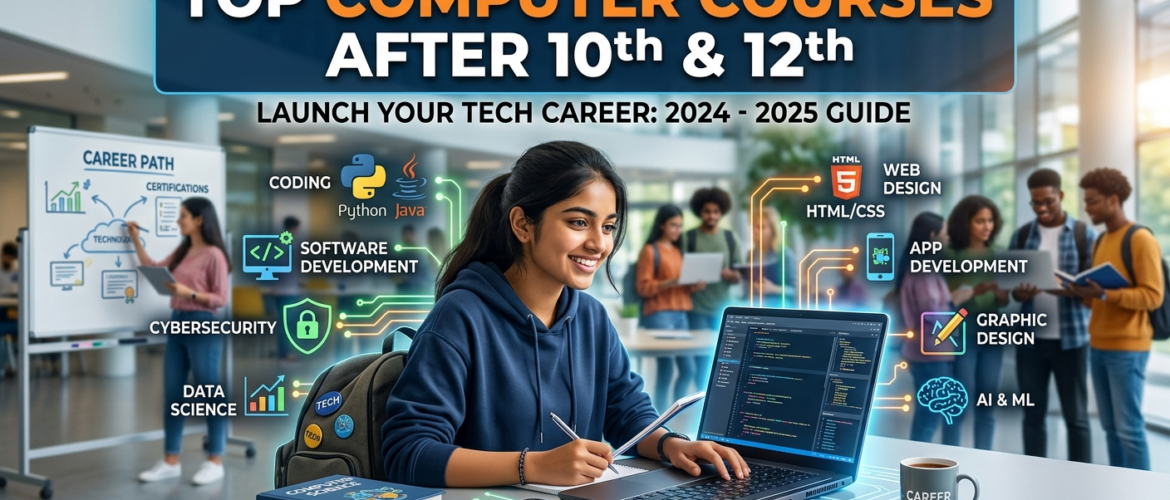
Top Computer Courses After 10th & 12th
Introduction
The modern world is inextricably intertwined with technology. From the simplest daily tasks to complex industrial operations, computers govern the rhythm of contemporary life. For students stepping out after 10th or 12th, this presents a remarkable opportunity. Choosing the right computer course at this stage is not merely an academic decision—it is a strategic investment in a future shaped by digital proficiency.
While traditional education provides foundational knowledge, specialized computer courses offer something more pragmatic. They equip students with actionable skills, industry relevance, and the ability to adapt in a perpetually evolving technological ecosystem.
Why Choose Computer Courses After 10th & 12th
The transition after school is often accompanied by uncertainty. However, computer courses provide clarity and direction. They bridge the gap between theoretical education and real-world application.
For students after 10th, these courses introduce early exposure to digital tools and concepts. This early immersion cultivates confidence and opens multiple career pathways. For those after 12th, computer courses act as accelerators, enabling specialization and immediate employability.
Moreover, the digital economy rewards skill over mere qualification. A student proficient in relevant technologies often stands ahead of peers with only academic credentials. In essence, these courses are not optional add-ons—they are catalysts for career transformation.
Basic Computer Courses
For beginners, foundational courses serve as the bedrock of digital literacy. Programs such as basic computer applications, office automation, and internet fundamentals are indispensable.
These courses cover essential tools like word processing, spreadsheets, and presentations. They instill operational fluency, ensuring that students can navigate digital environments with ease. While seemingly elementary, these competencies are universally required across industries.
A strong grasp of basics eliminates hesitation. It empowers students to explore advanced domains with confidence and precision.
Diploma in Computer Applications
A Diploma in Computer Applications is a comprehensive entry point into the world of computing. It encapsulates a broad spectrum of subjects, including software usage, programming basics, and database management.
This course is particularly advantageous for students seeking structured learning without committing to long-term degrees. It provides a balanced blend of theory and practical exposure.
Upon completion, students can pursue roles in administrative support, data entry, or continue their journey into specialized IT fields. The diploma acts as both a standalone qualification and a stepping stone toward advanced education.
Graphic Designing Courses
In an era dominated by visual storytelling, graphic design has emerged as a potent and lucrative skill. Courses in this domain focus on design principles, color theory, typography, and digital tools.
Students learn to create compelling visuals for advertisements, social media, branding, and digital platforms. The discipline demands creativity, but also precision and aesthetic sensibility.
Graphic designing offers remarkable flexibility. It enables freelancing, remote work, and entrepreneurial ventures. For creatively inclined individuals, it transforms imagination into tangible value.
Web Development Courses
Web development stands at the core of the digital universe. Every business, institution, and personal brand requires an online presence, making this skill perpetually relevant.
Courses typically begin with foundational languages such as HTML and CSS, progressing toward JavaScript and backend technologies. Students gain the ability to design, develop, and maintain websites.
The appeal of web development lies in its practicality. It allows learners to build real-world projects, portfolios, and even digital businesses. It is both a technical skill and a creative outlet.
Programming and Coding Courses
Programming is often regarded as the lingua franca of technology. It transcends mere syntax and delves into logical reasoning and problem-solving.
Courses in languages such as Python, Java, or C++ equip students with the ability to create software, applications, and automated systems. The learning curve may appear steep initially, yet the long-term rewards are substantial.
Coding cultivates analytical thinking. It trains the mind to deconstruct complex problems and construct efficient solutions. This intellectual discipline is invaluable across professions.
Data Entry and Office Management Courses
For students seeking quick employability, data entry and office management courses present a pragmatic choice. These programs focus on typing proficiency, data handling, and administrative tools.
They prepare students for roles that demand accuracy, speed, and organizational skills. While often underestimated, these positions form the backbone of many businesses.
Additionally, such courses can serve as an entry point into the corporate world, providing exposure and experience that can later be leveraged for growth.
Digital Marketing Courses
Digital marketing has revolutionized the way businesses interact with consumers. Courses in this field encompass search engine optimization, social media strategies, content creation, and online advertising.
Students acquire skills that are immediately applicable. They can promote brands, manage campaigns, and analyze performance metrics. The dynamic nature of this field ensures continuous learning and innovation.
Perhaps the most compelling aspect is accessibility. With minimal investment, students can begin freelancing, internships, or even launch their own ventures.
Animation and Multimedia Courses
Animation and multimedia courses cater to those with a penchant for storytelling and creativity. These programs delve into 2D and 3D animation, video editing, and visual effects.
Students learn to create engaging content for films, games, advertisements, and digital media platforms. The industry is expansive, offering opportunities in entertainment, education, and marketing.
This domain merges artistry with technology, resulting in a unique and highly rewarding career path.
Cybersecurity Courses
As digital dependence intensifies, so does the need for security. Cybersecurity courses focus on protecting systems, networks, and data from malicious threats.
Students are introduced to concepts such as ethical hacking, network security, and risk management. The field demands vigilance, analytical thinking, and technical expertise.
With cyber threats on the rise, professionals in this domain are in high demand. It is a career path that offers both stability and significance.
Choosing the Right Course
Selecting the appropriate course requires introspection and foresight. Interests, strengths, and career aspirations must align with the chosen field.
It is prudent to evaluate course content, industry relevance, and future scope. Practical exposure, certification value, and placement opportunities should also be considered.
An informed decision at this stage can redefine one’s trajectory. It transforms uncertainty into purpose and ambition into achievement.
Conclusion
The journey after 10th or 12th is laden with possibilities. Computer courses act as conduits, channeling potential into tangible success. They are not merely educational programs—they are gateways to independence, innovation, and professional fulfillment.